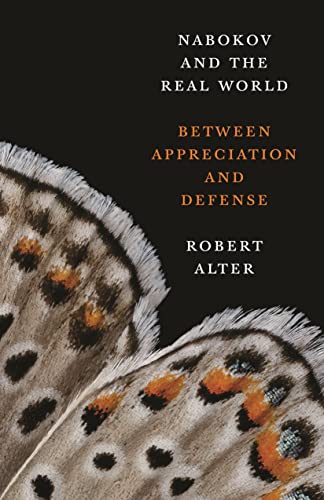
Nabokov and the real world : between appreciation and defense / Robert Alter.
Material type: TextPublisher: Princeton : Princeton University Press, [2021]Copyright date: ©2021Description: viii, 232 pages ; 22 cmContent type:
 - text
- unmediated
- volume
- 0691211930
- 9780691211930
- Between appreciation and defense
- Nabokov, Vladimir Vladimirovich, 1899-1977 -- Criticism and interpretation
- Nabokov, Vladimir Vladimirovich, 1899-1977 -- Appreciation
- Nabokov, Vladimir Vladimirovich, 1899-1977
- Nabokov, Vladimir Vladimirovich, 1899-1977 -- Criticism and interpretation
- Nabokov, Vladimir Vladimirovich, 1899-1977 -- Appreciation
- Art appreciation
- PS 3527.A15
| Cover image | Item type | Current library | Home library | Collection | Shelving location | Call number | Materials specified | Vol info | URL | Copy number | Status | Notes | Date due | Barcode | Item holds | Item hold queue priority | Course reserves | |
|---|---|---|---|---|---|---|---|---|---|---|---|---|---|---|---|---|---|---|
 Non-Fiction
|
Kapasa Makasa University Open Access | Kapasa Makasa University | Non-fiction | PS 3527.A15 Alt (Browse shelf(Opens below)) | Available | 300918 |
Includes bibliographical references (pages 227-228) and index.
Between appreciation and defense -- Not reading the papers -- Lolita now -- Nabokov's game of worlds -- Autobiography as alchemy in Pale Fire -- Ada, or the perils of paradise -- Nabokov for those who hate him: the curious case of Pnin -- Invitation to a Beheading: Nabokov and the art of politics -- Nabokov and memory -- Lectures on literature -- Style in the novel, style in Nabokov, and the question of translation.
Admirers and detractors of Vladimir Nabokov have viewed him as an ingenious contriver of literary games, teasing and even outsmarting his readers through his self-reflexive artifice and the many codes and puzzles he devises in his fiction. Nabokov himself spoke a number of times about reality as a term that always has to be put in scare quotes. Consequently, many critics and readers have thought of him as a writer uninterested in the world outside literature. Robert Alter shows how Nabokov was passionately concerned with the real world and its complexities, from love and loss to exile, freedom, and the impact of contemporary politics on our lives. In these essays, Alter spans the breadth of Nabokov's writings, from his memoir, lectures, and short stories to major novels such as Lolita. He demonstrates how the self-reflexivity of Nabokov's fiction becomes a vehicle for expressing very real concerns. What emerges is a portrait of a brilliant stylist who is at once serious and playful, who cared deeply about human relationships and the burden of loss, and who was acutely sensitive to the ways political ideologies can distort human values.